
When you select pipes for water supply, sewage, irrigation, or infrastructure projects, quality and compliance matter. ISI Marked Pipes meet the requirements of the applicable Indian Standard under the relevant Bureau of Indian Standards (BIS) certification framework. For project owners, contractors, engineers, and procurement teams, these standards provide a clear reference when evaluating pipe quality, specifications, and suitability for a particular application.
But what does the ISI mark actually mean, and why should you consider it when buying pipes? Understanding Indian Standards can help you compare products more effectively and select pipes that match your project’s technical requirements.
What Does the ISI Mark on Pipes Mean?
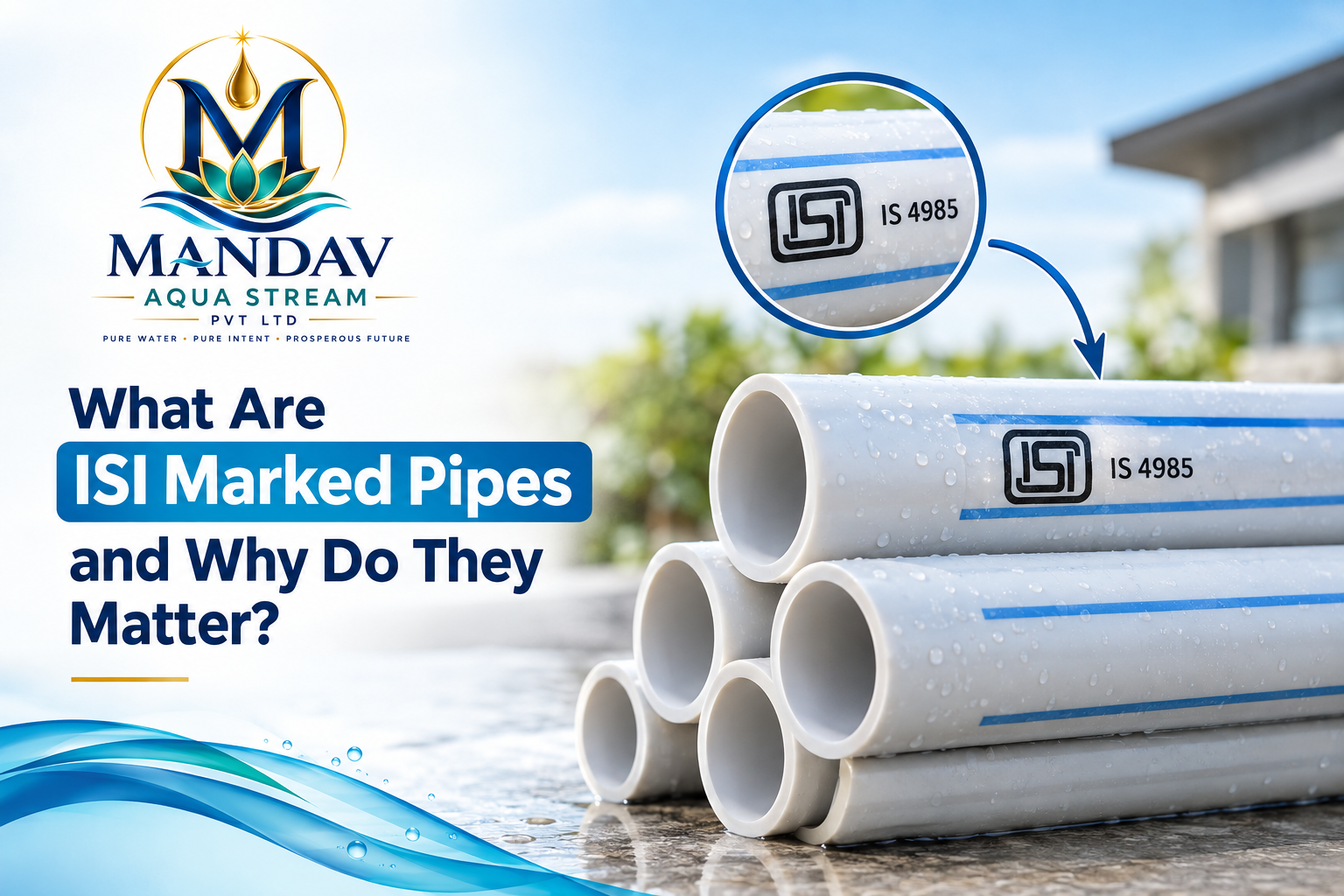
The ISI mark shows that a product conforms to the applicable Indian Standard under the relevant BIS certification framework.
For pipes, the applicable standard depends on the pipe material, manufacturing process, dimensions, pressure requirements, and intended application. Different pipe categories can therefore follow different Indian Standard specifications.
The ISI mark does not represent a general quality label for every type of pipe. Instead, it connects a specific product with a particular Indian Standard. Buyers should check the relevant standard number and certification details rather than relying only on the ISI logo.
Why Are ISI Marked Pipes Important?
Pipeline systems often operate for many years. Poor-quality or unsuitable pipes can lead to leakage, maintenance issues, premature replacement, and project delays.
ISI certification gives buyers a defined standard for evaluating whether a product meets specified technical requirements.
1. They Follow Defined Indian Standards
Indian Standards establish technical requirements for specific products and applications. Depending on the pipe category, these requirements can cover dimensions, materials, manufacturing characteristics, testing, and performance.
This gives buyers a recognized technical reference when they compare different products.
2. They Support Consistent Product Quality
Manufacturers follow defined requirements when they produce products under the applicable certification framework. This can help maintain consistency between production batches.
Consistent pipe dimensions and specifications also support transportation, installation, jointing, and maintenance activities.
3. They Help Meet Project Specifications
Infrastructure projects often include detailed specifications for pipes and other pipeline components. Consultants, contractors, project owners, and procurement teams may require products that comply with specific Indian Standards.
Selecting the appropriate certified product can help procurement teams meet these technical requirements.
4. They Give Buyers More Purchasing Confidence
Price alone does not provide enough information when you purchase pipeline products. A low-cost product may not match the required technical specification.
Checking the applicable standard and certification details gives buyers useful information when they compare products and suppliers.
Which Types of Pipes Can Have ISI Certification?
The applicable certification depends on the pipe type and its relevant Indian Standard. Manufacturers produce pipes from different materials and design them for different applications.
Common categories include:
| Pipe Category | Typical Applications | What Buyers Should Check |
|---|---|---|
| Ductile Iron Pipes | Water supply and infrastructure | Applicable IS, class, and dimensions |
| DI Spun Pipes | Water transmission and distribution | Relevant standard and pressure class |
| DI Flanged Pipes | Pipeline connections and installations | Flange dimensions and applicable standard |
| Steel Pipes | Industrial and infrastructure systems | Material grade and applicable specification |
| Plastic Pipes | Water supply, drainage, and other systems | Material, pressure rating, and relevant IS |
Always verify the exact standard for the specific pipe and application. A standard that applies to one pipe category does not automatically apply to another.
How Are ISI Marked Pipes Tested?
Testing requirements vary according to the applicable Indian Standard. Manufacturers must meet the technical requirements specified for their products and follow the relevant inspection and testing procedures.
Depending on the pipe type, testing can cover areas such as:
- Dimensions and wall thickness
- Material properties
- Mechanical characteristics
- Hydrostatic or pressure-related performance
- Surface and manufacturing quality
- Coating or lining requirements
- Jointing characteristics
- Other parameters specified by the applicable standard
These tests help determine whether the product meets the technical requirements associated with the relevant Indian Standard.
How to Check Whether a Pipe Is ISI Certified?
Do not rely only on a supplier’s verbal assurance when purchasing an ISI-marked pipe. Check the product markings and supporting documentation before making a purchase.
Check the Standard Number
Look for the relevant Indian Standard number associated with the pipe. Make sure the standard applies to the specific product you plan to purchase.
Verify the Certification Details
Check the manufacturer’s certification and licence information through the official BIS system or the documentation provided with the product.
Review Product Markings
Look for required information on the pipe and its documentation. Depending on the product, markings may include the manufacturer’s identification, standard reference, size, class, and other relevant details.
Match the Product With Project Requirements
An ISI-certified pipe may still fail to meet your project’s needs if it has the wrong size, pressure class, material specification, or application.
Always evaluate certification alongside the project’s complete technical requirements.
ISI Marked Pipes vs Non-Certified Pipes
The main distinction lies in conformity with a specified Indian Standard under the applicable certification framework.
| Factor | ISI Marked Pipes | Non-Certified Pipes |
|---|---|---|
| Standard reference | Linked to an applicable Indian Standard | May not have applicable certification |
| Quality assessment | Follows relevant certification requirements | Depends on the manufacturer’s quality controls |
| Documentation | Certification and product information can be verified | Documentation may vary by supplier |
| Project compliance | Can support projects that specify certified products | May not meet projects requiring certification |
| Buyer verification | Provides a defined standard for comparison | Requires additional technical checks |
This comparison does not mean that every non-ISI-marked pipe has poor quality. Instead, ISI certification gives buyers a recognized standard and certification framework to check when a project requires certified products.
What Should You Consider Beyond the ISI Mark?
The ISI mark matters, but it should not serve as your only selection criterion.
Choose pipes according to the operating conditions and technical requirements of the pipeline.
Pipe Material and Application
First, identify the intended application. A pipeline may carry potable water, raw water, sewage, irrigation water, or industrial fluids.
Each application can require different materials and specifications.
Pressure and Flow Requirements
Match the pipe’s pressure class and dimensions with the system’s operating requirements. An unsuitable specification can affect pipeline performance and reliability.
Pipe Dimensions
Check the diameter, wall thickness, length, joint type, and dimensional tolerances against the project specification.
Coating and Lining
Some pipe applications require protective coatings or internal linings. These features can support corrosion protection and help the pipe perform under specific operating conditions.
Supplier Documentation
Choose a supplier that can provide relevant technical specifications, certification details, product information, and other documentation required for the project.
Why Standardized Pipes Matter in Infrastructure Projects?
Large pipeline systems contain several components that must work together. Pipes, fittings, valves, joints, and other components need to match the system design.
Standardization gives engineers and procurement teams clearly defined product requirements. It also provides a common technical reference for product evaluation.
Standardized specifications can simplify quality checks during procurement and installation. They can also help project teams compare products more consistently.
This approach matters across water supply networks, sewage systems, irrigation projects, industrial pipelines, and other infrastructure applications.
How to Choose the Right ISI Marked Pipe?
Start your pipe selection process with the project requirements rather than price alone.
Follow these steps:
- Define the application: Determine whether the pipe will serve a water supply, sewage, irrigation, industrial, or another application.
- Identify the applicable standard: Find the Indian Standard that applies to the selected pipe category.
- Select the required size: Match the diameter, length, wall thickness, and other dimensions with the project design.
- Check pressure requirements: Select the appropriate pressure or class specification where applicable.
- Verify certification: Check the relevant BIS certification and supporting product documentation.
- Evaluate the supplier: Consider technical support, documentation, supply capability, and service.
- Check compatibility: Make sure pipes, fittings, valves, joints, and other components work together within the pipeline system.
This process helps buyers evaluate the complete product specification instead of treating the ISI mark as the only purchasing factor.
Where Are ISI Marked Pipes Commonly Used?
ISI-certified pipes can serve a wide range of infrastructure applications, depending on the applicable standard and pipe type.
Common applications include:
- Municipal water supply networks
- Drinking water infrastructure
- Sewage and drainage systems
- Irrigation projects
- Industrial pipeline networks
- Water transmission systems
- Infrastructure development projects
- Commercial and institutional projects
Always select the pipe specification according to the engineering design, operating conditions, and applicable project requirements.
Why Supplier Selection Matters for Pipe Quality?
A project that requires ISI-certified products needs more than a product description. Procurement teams should also evaluate the supplier’s ability to provide suitable products and relevant documentation.
A reliable pipeline supplier can help buyers understand product specifications and identify options that match project requirements.
Mandav Aqua Stream Pvt Ltd. supplies pipeline products for water supply, sewage, irrigation, industrial, and infrastructure applications. With 30+ years of industry experience, the company focuses on dependable products and long-term business relationships.
For procurement teams, an experienced supplier can make it easier to review specifications, understand product options, and plan pipeline requirements.
Final Thoughts on ISI Marked Pipes
ISI Marked Pipes give buyers a recognized standard-based framework for checking product conformity and technical requirements. For infrastructure projects, this framework can support structured procurement and quality verification.
However, buyers should consider more than the ISI mark. Pipe material, dimensions, pressure requirements, application, certification details, and project specifications all play an important role in product selection.
Before placing an order, verify the applicable Indian Standard and certification information. Then confirm that the pipe matches the technical requirements of your pipeline system.
If you are planning a water supply, sewage, irrigation, industrial, or infrastructure project, Mandav Aqua Stream Pvt Ltd. can help you explore suitable pipeline products based on your requirements.
Contact Mandav Aqua Stream Pvt Ltd. today to discuss your pipe and pipeline requirements and find a suitable solution for your project.
Frequently Asked Questions
1. What are ISI Marked Pipes?
ISI Marked Pipes comply with an applicable Indian Standard under the relevant BIS certification framework. The specific standard depends on the pipe type, material, and intended application.
2. Is an ISI mark enough to choose a pipe?
No. Buyers should also check the applicable standard, pipe material, dimensions, pressure class, application, certification details, and project specifications before purchasing.
3. How can I verify an ISI marked pipe?
Check the product markings, applicable Indian Standard, manufacturer’s certification information, and supporting documentation. You can also verify relevant certification details through the official BIS system where applicable.
4. Are ISI marked pipes suitable for water supply projects?
They can be suitable when the pipe follows the applicable standard and its material, size, pressure class, and other specifications match the water supply project’s requirements.
5. Why should infrastructure projects use standardized pipes?
Standardized pipes provide defined technical requirements that help project teams evaluate products consistently, support procurement specifications, and maintain compatibility across pipeline systems.
