
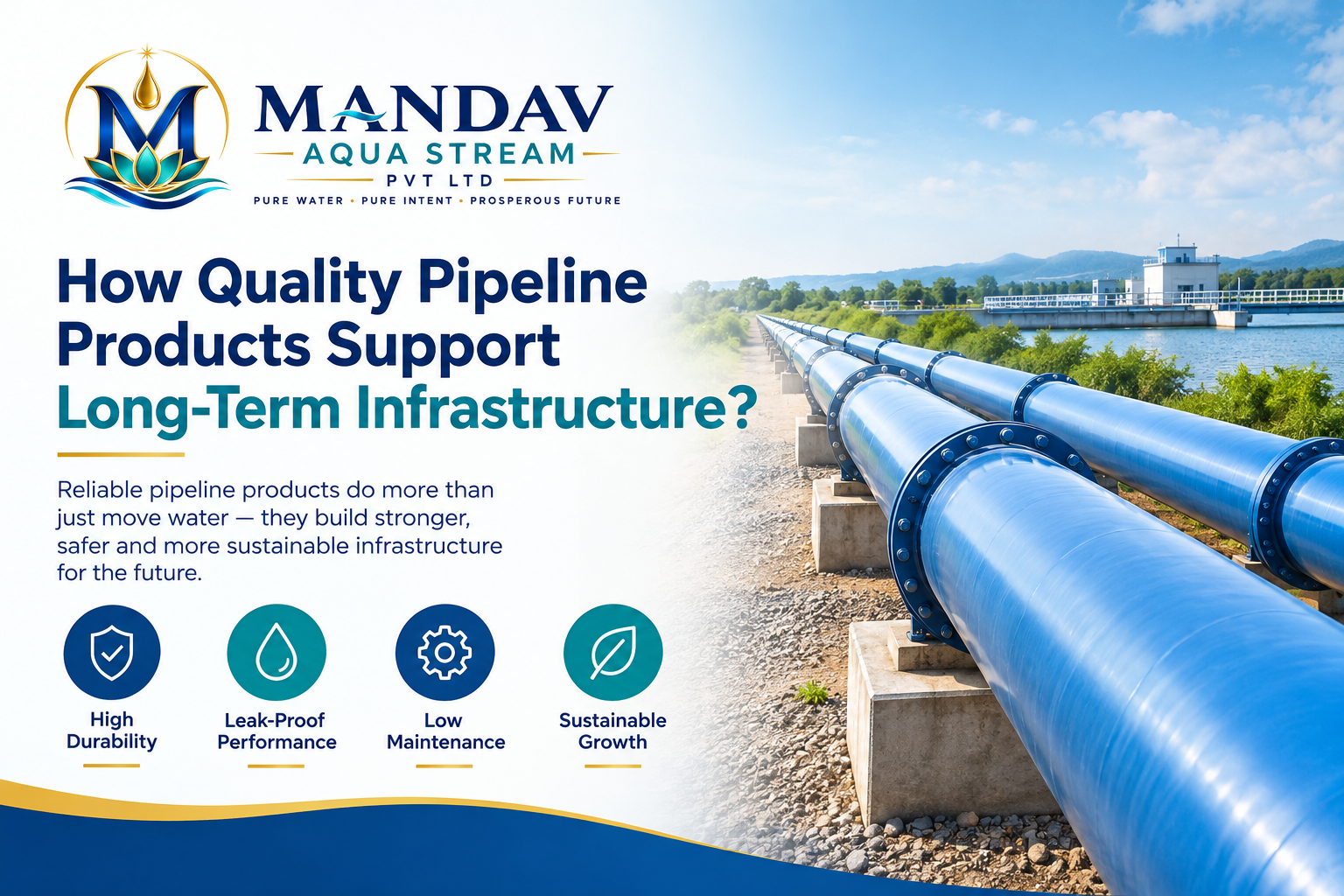
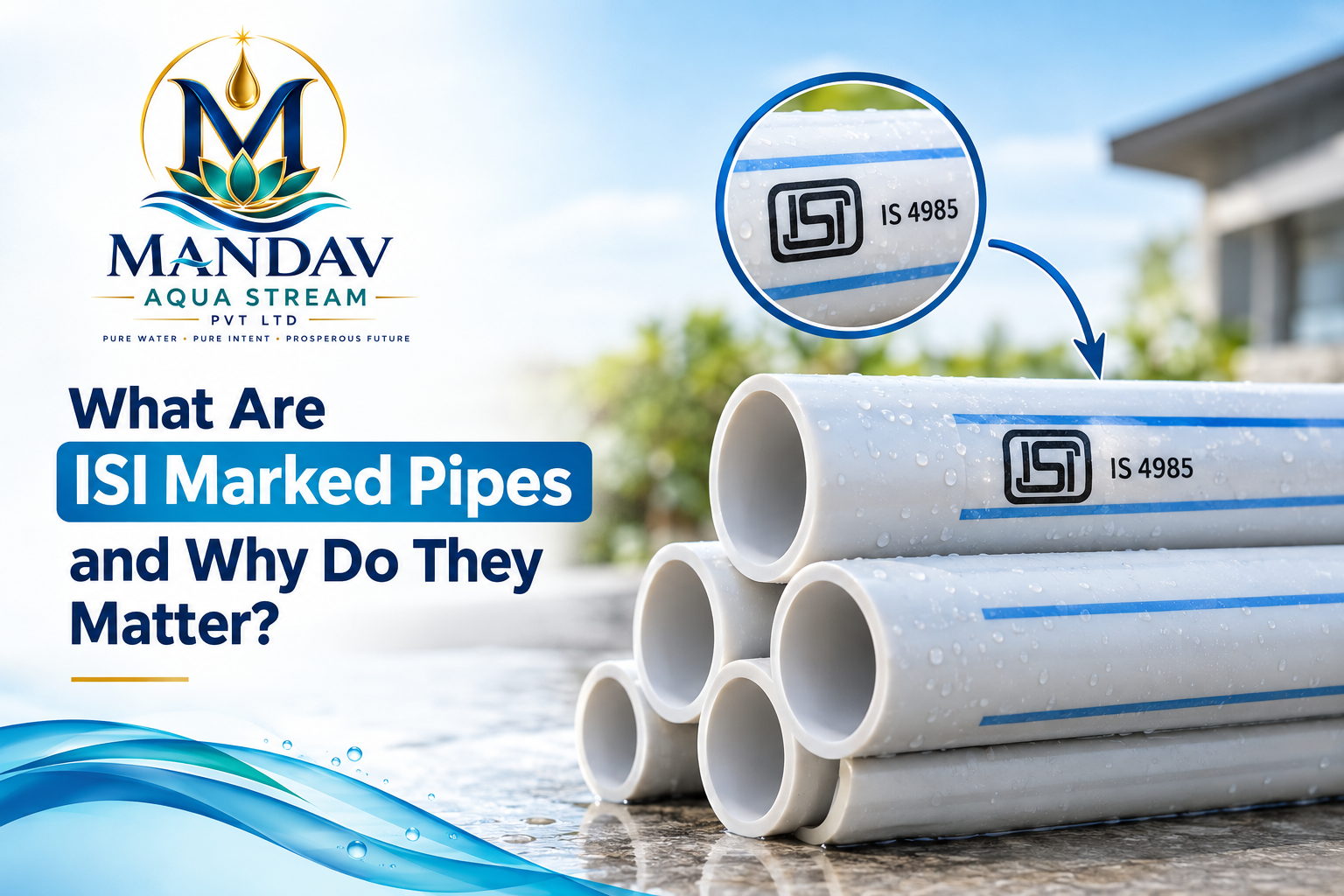
Pipes are essential to modern infrastructure, helping transport drinking water, manage wastewater, support irrigation, and connect industrial facilities. Choosing the right type of pipe is crucial for ensuring efficient water flow, preventing leakage, controlling maintenance costs, and improving the long-term reliability of pipeline networks. Different materials offer different advantages depending on pressure requirements, soil conditions, installation methods, and project needs.
From ductile iron and cast iron to PVC, HDPE, galvanized iron, and mild steel, each pipe type serves specific applications. Understanding their characteristics helps engineers, contractors, procurement teams, and infrastructure developers make informed decisions for water supply and utility projects.
Why Choosing the Right Pipes Matters in Infrastructure?
Pipeline systems often operate underground or in demanding environments, where repairs can be expensive and disruptive. Selecting a suitable material helps ensure dependable performance throughout the system’s intended service life.
The right pipes can offer several benefits:
- Reliable water transportation: Suitable pipe materials support consistent flow and appropriate pressure performance.
- Reduced leakage: Compatible joints and proper installation help minimise water loss.
- Long-term durability: Material selection influences resistance to corrosion, impact, abrasion, and external loads.
- Lower maintenance requirements: Well-designed pipeline systems can reduce repair frequency and operating costs.
- Project efficiency: Choosing appropriate sizes, fittings, and materials can simplify installation and future maintenance.
The ideal solution depends on the intended application rather than material preference alone.
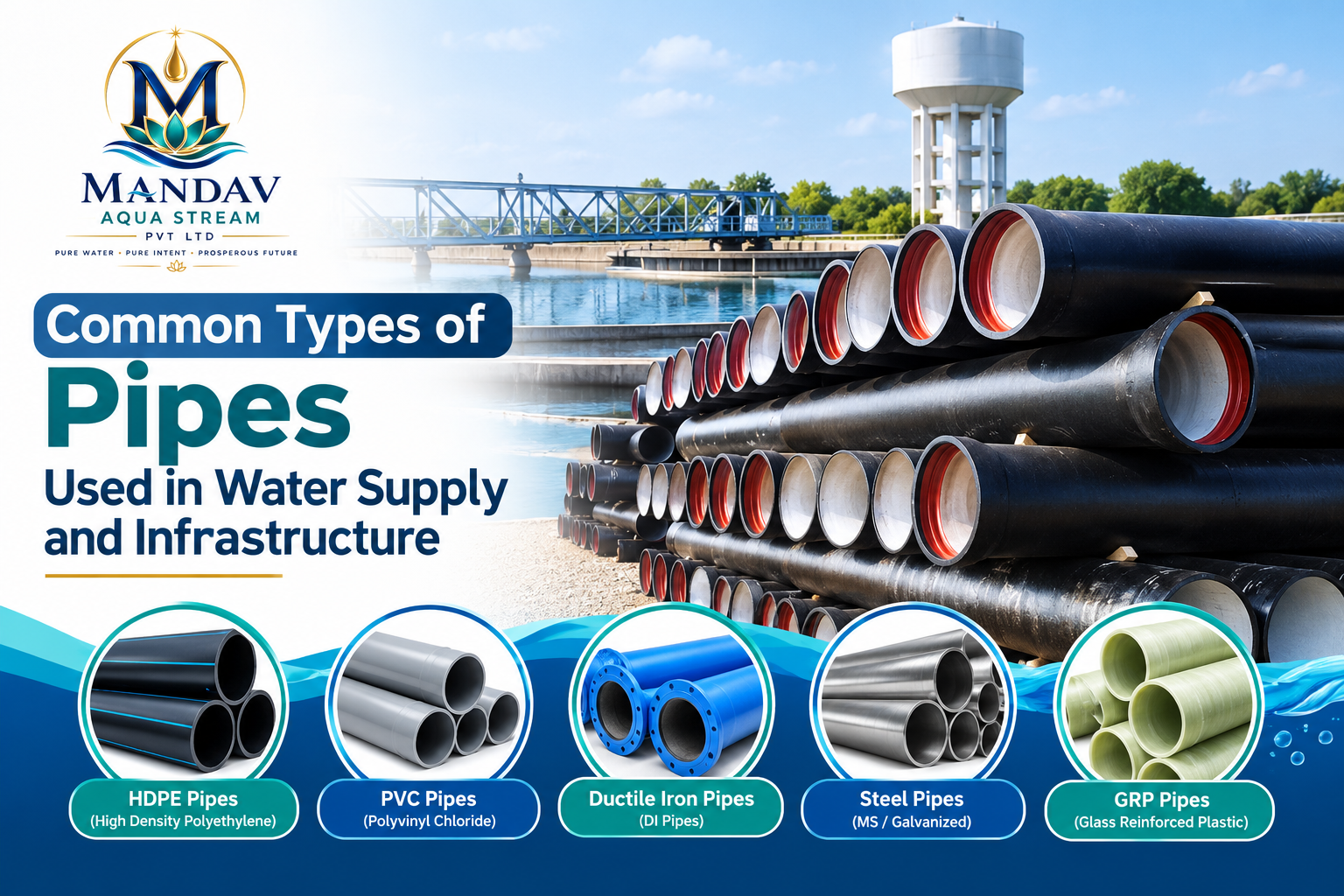
6 Common Types of Pipes for Water Infrastructure
Different types of pipes are used across municipal water supply, sewage networks, agricultural irrigation, industrial facilities, and construction projects. Following materials are among the most widely recognised options.
1. Ductile Iron Pipes for Water Transmission Systems
Ductile iron (DI) pipes are widely used in municipal water distribution, bulk water transmission, sewerage, and infrastructure projects. They combine high mechanical strength with ductility, helping them withstand demanding operating conditions when correctly specified and installed.
These pipes are commonly selected for underground networks that require dependable pressure performance and resistance to external loading. Protective coatings, internal linings, and suitable jointing systems help support long-term service.
Key benefits:
- High mechanical strength and impact resistance
- Suitable for pressure-based water distribution networks
- Durable construction for demanding infrastructure applications
- Availability in different diameters and pressure classes
- Compatible fittings and joint systems for pipeline connections
The DI pipes are particularly relevant to large municipal projects where reliability and long-term performance are important. Their suitability should be assessed against design pressure, soil conditions, water characteristics, and applicable standards.
2. Cast Iron Pipes for Drainage and Sewage
Cast iron (CI) pipes have traditionally been used in drainage, sewerage, soil systems, and certain water conveyance applications. Their rigid construction provides good mechanical strength and can support installations where resistance to external loads is important.
The precise application depends on the pipe design, specification, and installation environment. Older cast iron systems may also require assessment for corrosion, joint condition, and structural integrity.
Key benefits:
- Strong, rigid construction
- Useful for selected drainage and sewerage applications
- Suitable for certain underground installations
- Available in different configurations for specific system requirements
Cast iron pipes can be considered for appropriate drainage and utility projects, but their weight, handling requirements, and corrosion protection should be evaluated before selection.
3. PVC Pipes for Water Distribution and Irrigation
Polyvinyl chloride (PVC) pipes are lightweight plastic pipes used in water distribution, plumbing, irrigation, drainage, and other utility applications. They are generally easy to handle and install compared with heavier metallic alternatives.
PVC also offers good resistance to many forms of corrosion. However, its pressure rating, temperature limitations, exposure conditions, and suitability for drinking water must be verified for the intended application.
Key benefits:
- Lightweight construction for easier handling
- Resistance to rust and many corrosive conditions
- Smooth internal surfaces that support efficient flow
- Availability in different sizes and pressure ratings
- Practical installation for suitable water and irrigation systems
PVC pipes are often considered for projects where corrosion resistance and straightforward installation are priorities.
4. HDPE Pipes for Flexible Pipeline Networks
High-density polyethylene (HDPE) pipes are flexible plastic pipes commonly used for water supply, irrigation, industrial fluid transportation, and selected utility networks. Their flexibility can help accommodate ground movement and simplify installation along changing routes.
HDPE systems frequently use heat-fused joints, which can create continuous, leak-resistant connections when the materials and fusion process are suitable and properly controlled.
Key benefits:
- Flexibility for different installation conditions
- Resistance to corrosion and many chemicals
- Potentially low leakage risk with correctly fused joints
- Suitability for certain trenchless installation methods
- Relatively easy handling compared with heavy metallic pipes
HDPE is worth considering where flexibility and joint integrity are important. The required pressure class, pipe dimensions, joining procedure, and operating temperature must be checked during design.
5. Galvanized Iron Pipes for Plumbing and Utilities
Galvanized iron (GI) pipes are steel or iron pipes protected by a zinc coating to help reduce corrosion. They have been used in plumbing, water supply, fire protection, and selected utility applications.
The protective coating can improve resistance to rust, but it does not eliminate corrosion under every operating condition. Over time, internal deposits or deterioration may affect water flow and pipe performance.
Key benefits:
- Metallic construction with good mechanical strength
- Zinc coating for corrosion protection
- Compatibility with suitable threaded fittings
- Applications across certain plumbing and utility systems
When considering GI pipes, evaluate water chemistry, coating condition, pressure requirements, and current drinking-water regulations. Alternative materials may be more appropriate for some modern water supply installations.
6. Mild Steel Pipes for Industrial Applications
Mild steel (MS) pipes are used in water transmission, industrial pipelines, fire protection, structural applications, and infrastructure projects. Their strength and weldability make them useful for systems that require specific dimensions, fabrication, or engineered connections.
Corrosion protection is particularly important when MS pipes operate in wet, underground, or chemically aggressive environments. Suitable coatings, linings, inspection, and maintenance plans can help manage corrosion risks.
Key benefits:
- High mechanical strength
- Good weldability and fabrication flexibility
- Availability in different diameters and wall thicknesses
- Suitability for selected high-capacity industrial systems
MS pipes can be a practical option when project specifications call for fabricated steel pipelines. Their pressure capacity and durability depend on material grade, wall thickness, joint design, and protective systems.
Pipe Types Compared by Material and Application
The following table provides a general comparison of common pipe materials and their typical uses.
| Pipe type | Main advantages | Common applications |
|---|---|---|
| Ductile iron | Strength and durability | Municipal water supply, transmission, sewerage |
| Cast iron | Rigid, robust construction | Drainage, soil and sewerage systems |
| PVC | Lightweight and corrosion-resistant | Water distribution, plumbing, irrigation |
| HDPE | Flexible and corrosion-resistant | Water supply, irrigation, selected utility networks |
| Galvanized iron | Metallic strength and zinc protection | Plumbing and selected utility systems |
| Mild steel | Strength and weldability | Industrial pipelines, water transmission, fire protection |
This comparison is a starting point, not a substitute for engineering assessment. Actual performance varies with pipe grade, dimensions, pressure rating, installation quality, water characteristics, and operating conditions.
How to Select the Right Pipes for Your Project?
Selecting pipes requires more than comparing material prices. Project teams should assess technical requirements, site conditions, applicable standards, and the complete cost of installation and operation.
Assess Pressure and Flow Requirements
Determine the required flow rate, operating pressure, and possible pressure surges. Select a pipe with suitable dimensions, wall thickness, and pressure rating for the system’s design conditions.
Consider Soil and Installation Conditions
Underground pipelines may face external loads, ground movement, moisture, and corrosive soil. Above-ground systems may experience temperature changes, sunlight exposure, and mechanical impacts. Match the material and protective measures to these conditions.
Verify Standards and Product Quality
Review relevant Indian Standards, approved specifications, product markings, test documentation, and required certifications. For example, ductile iron pipes may be specified to IS 8329, while other materials have their own applicable standards. Always confirm the current standard and its suitability for the intended application.
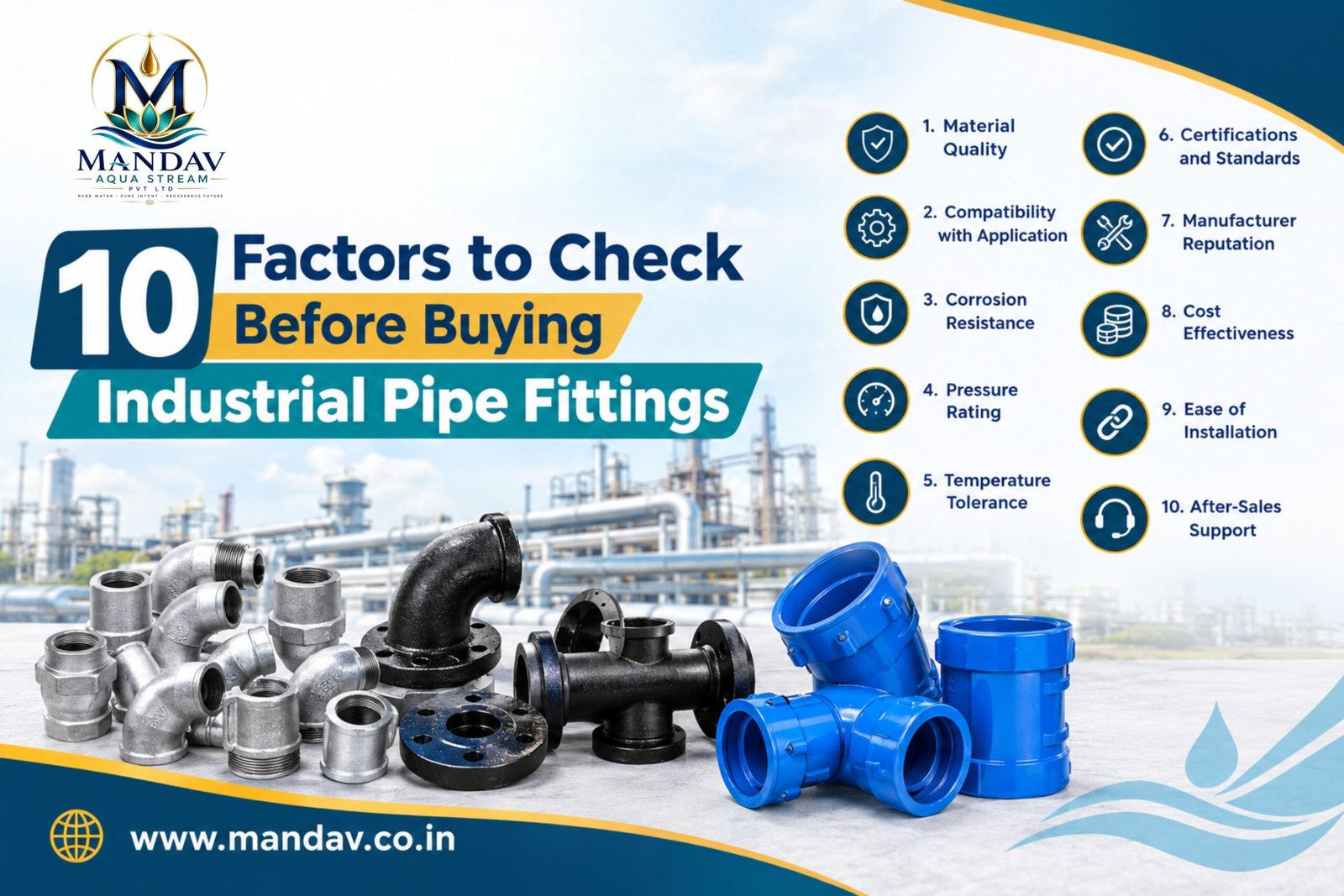
Evaluate Fittings and Joint Compatibility
Bends, tees, reducers, flanges, valves, and other fittings must match the pipe material, dimensions, and pressure class. Correctly selected components help create a reliable pipeline network and simplify maintenance.
Compare Total Project Costs
Consider transportation, installation, jointing, protective coatings, inspections, repairs, and expected maintenance—not just the initial purchase price. A lower upfront cost does not necessarily mean a more economical solution over the system’s lifetime.
Why Choose a Reliable Pipeline Products Supplier?
A dependable supplier helps procurement teams identify suitable products, verify specifications, coordinate documentation, and plan deliveries around project requirements. These factors are especially important for municipal water supply, sewerage, irrigation, and large infrastructure developments.
Mandav Aqua Stream Pvt Ltd. supplies pipeline products for water supply, sewage, irrigation, industrial, and infrastructure applications. Its product portfolio includes ductile iron pipes, cast iron pipes, GI pipes, HDPE pipes, PVC pipes, mild steel pipes, fittings, and valves.
With over 30 years of combined industry experience highlighted by the company, along with a network serving multiple regions, Mandav focuses on product quality, dependable supply, and long-term business relationships.
Before placing an order, share your project specifications, required quantities, delivery schedule, and applicable standards so the appropriate products can be evaluated for your needs.
Conclusion: Make an Informed Pipe Selection
The right pipes are fundamental to efficient water supply, reliable wastewater management, and durable infrastructure. Ductile iron, cast iron, PVC, HDPE, galvanized iron, and mild steel each offer different benefits, making material selection dependent on the project’s technical and operating requirements.
By assessing pressure, flow, site conditions, quality standards, fittings, and lifecycle costs, project teams can make better procurement decisions and reduce avoidable maintenance challenges.
Planning a water supply or infrastructure project? Contact Mandav Aqua Stream Pvt Ltd to discuss your pipeline product requirements, request product details, and identify suitable solutions for your project.
Frequently Asked Questions
1. Which type of pipe is best for water supply projects?
The best pipe depends on pressure, water quality, installation conditions, budget, and applicable standards. Ductile iron, PVC, and HDPE are commonly considered for different water supply applications.
2. What are the most commonly used pipes in infrastructure?
Ductile iron, cast iron, PVC, HDPE, galvanized iron, and mild steel pipes are used across various infrastructure applications, including water supply, drainage, irrigation, and industrial systems.
3. Are ductile iron pipes suitable for underground water supply?
Yes. Ductile iron pipes are widely used in underground water supply networks because of their mechanical strength and pressure-handling capabilities. Proper jointing, corrosion protection, and installation are essential.
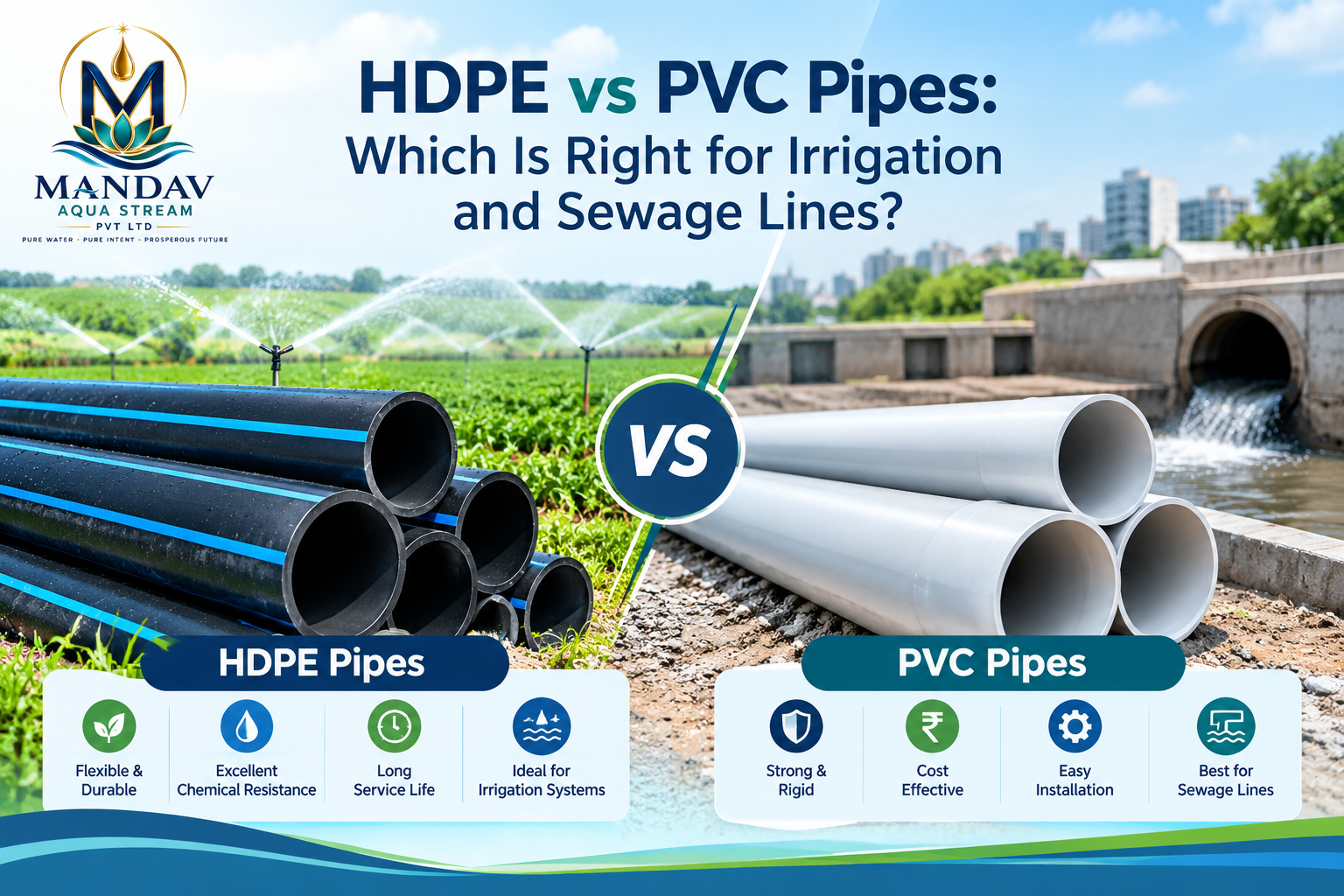
4. What is the difference between PVC and HDPE pipes?
PVC pipes are rigid and lightweight, while HDPE pipes are flexible and commonly joined through heat fusion. The appropriate choice depends on pressure requirements, installation conditions, and the intended application.
5. What should I check before purchasing pipes for a project?
Check the material, diameter, wall thickness, pressure rating, applicable standards, quality documentation, fitting compatibility, delivery requirements, and total installation and maintenance costs.
