
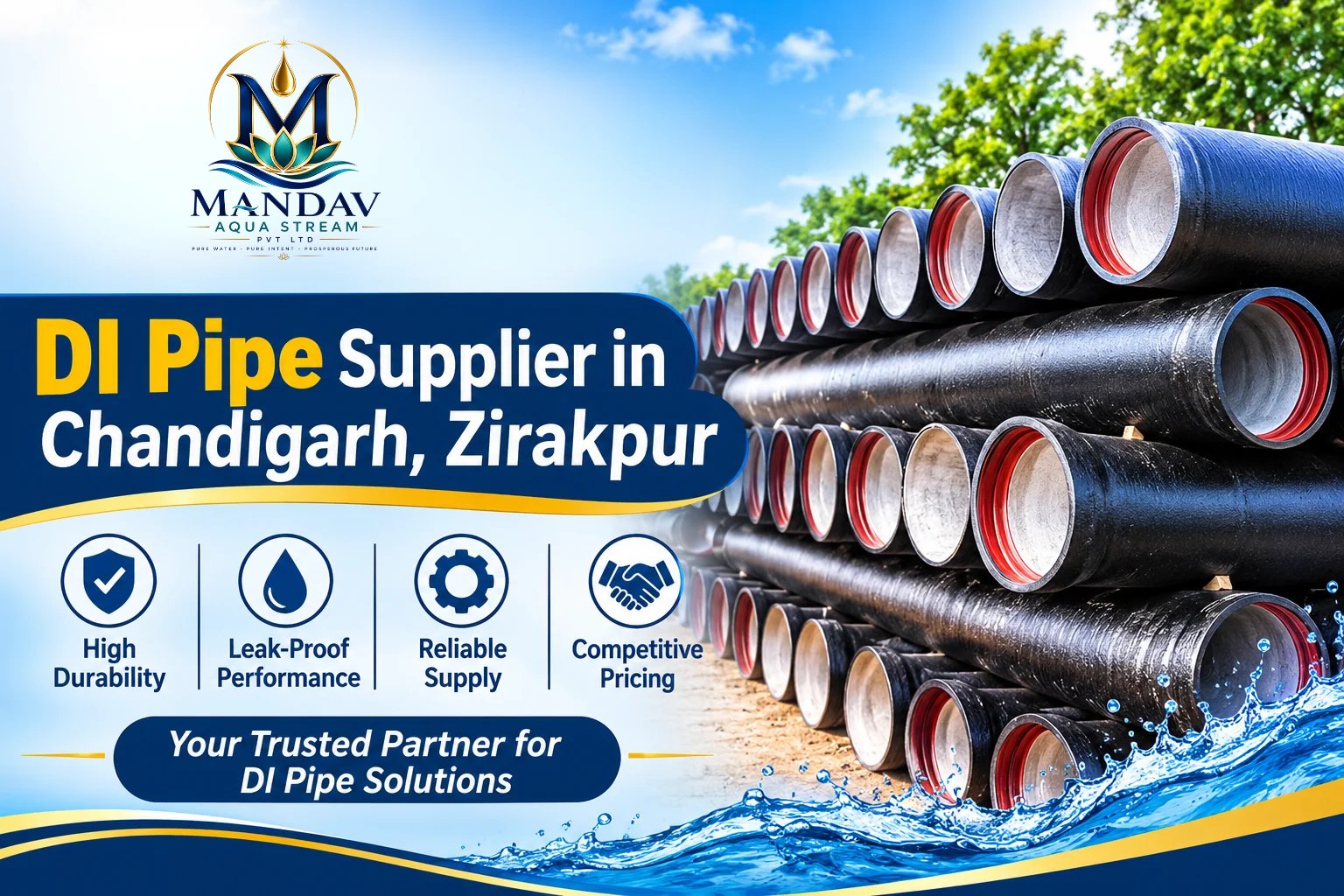
Selecting a reliable DI Pipe Supplier in Chandigarh, Zirakpur is essential for infrastructure projects that require strong, dependable, and long-lasting pipeline systems. Ductile Iron (DI) pipes are widely used in municipal water distribution, sewage networks, industrial facilities, irrigation systems, and large-scale infrastructure because of their mechanical strength, pressure-handling capabilities, and reliable jointing arrangements. However, choosing the right pipes involves understanding technical specifications, operating conditions, corrosion protection, and the supplier’s ability to meet project requirements.
As infrastructure development continues across Chandigarh, Zirakpur, Mohali, and surrounding areas, the demand for quality pipeline materials is increasing. Contractors, civil engineers, government departments, and industrial buyers need products that meet project specifications while supporting efficient installation and long-term operation.
This guide explains how DI pipes work, where they are used, which specifications matter during procurement, and how to select a suitable supply partner for your next project.
Why a Reliable DI Pipe Supplier Matters for Projects?
Finding the right DI Pipe Supplier in Chandigarh, Zirakpur is not simply about purchasing pipes at competitive prices. Pipeline systems are long-term infrastructure investments, and material selection directly affects their installation, operating performance, maintenance requirements, and overall project cost.
A water distribution network, for example, must handle continuous internal pressure while also dealing with external soil loads, ground movement, and changing operating conditions. Similarly, sewage and industrial pipeline systems may require additional protection against aggressive fluids and environmental exposure.
An experienced supplier can help buyers coordinate several important procurement requirements:
- Product specifications: Understanding the required nominal diameter, pressure class, pipe length, and wall thickness.
- Material suitability: Selecting products appropriate for the intended application and operating environment.
- Protective systems: Checking internal linings and external coatings according to site conditions.
- Fittings and accessories: Coordinating compatible bends, tees, reducers, and jointing components.
- Supply planning: Arranging material quantities and delivery schedules according to project timelines.
- Documentation: Obtaining relevant technical specifications, test certificates, and compliance documents.
For contractors handling multiple pipeline installations, working with an experienced supply partner can make material procurement more organised and predictable.
Understanding DI Pipes and Their Manufacturing Process
Ductile Iron pipes are manufactured using an iron alloy in which the graphite structure is modified to improve the material’s ductility and toughness. This distinguishes them from traditional grey cast iron, which has a more brittle graphite structure.
The manufacturing process plays an important role in determining the mechanical properties and quality of the finished pipe.
How Ductile Iron Pipes Are Manufactured?
The manufacturing process generally involves the following stages:
1. Melting and material preparation
Iron and other required materials are melted in controlled conditions. Magnesium treatment is used to encourage the formation of spheroidal graphite within the iron structure.
2. Centrifugal casting
Molten ductile iron is poured into rotating moulds. Centrifugal force helps distribute the metal evenly, producing a pipe with a consistent wall structure.
3. Heat treatment
The pipes undergo controlled heat treatment to achieve the required mechanical properties. This process helps develop the strength and elongation characteristics specified for ductile iron.
4. Surface finishing and inspection
Pipes are inspected for dimensional accuracy, surface quality, and relevant mechanical properties. Testing requirements depend on the applicable manufacturing standard.
5. Internal lining and external coating
Suitable protective treatments are applied according to the intended service conditions. Cement mortar lining and zinc-based external coatings are commonly used in water pipeline applications.
Understanding these stages helps buyers appreciate why manufacturing quality, inspection procedures, and product documentation matter when purchasing DI pipes.
Important DI Pipe Specifications Buyers Should Understand
Before selecting a product, buyers should understand the technical parameters that determine whether a DI pipe is suitable for a particular project.
| Specification | What It Means | Why It Matters |
| Nominal Diameter (DN) | Designation of pipe size | Helps determine pipeline capacity and compatibility |
| Pressure Class | Pressure-related classification | Supports selection according to system requirements |
| Wall Thickness | Thickness of the pipe wall | Influences structural and pressure performance |
| Internal Lining | Protective layer inside the pipe | Helps protect the pipe interior |
| External Coating | Protective layer on the outer surface | Reduces corrosion risk |
| Joint Type | Connection arrangement | Affects installation and pipeline flexibility |
| Pipe Length | Length of each pipe section | Influences transportation and installation planning |
1. Nominal Diameter and Flow Requirements
The nominal diameter is one of the first specifications engineers consider when designing a pipeline network. It influences the available flow area and must be selected according to the required flow rate, velocity, and hydraulic design.
Choosing an unsuitable diameter can affect pumping requirements, pressure losses, and overall network efficiency.
2. Pressure Class and Operating Conditions
DI pipes are manufactured in different pressure classifications. The appropriate selection depends on operating pressure, surge pressure, external loading, and installation conditions.
Buyers should not assume that a higher pressure class is automatically necessary. The project engineer should determine the appropriate pipe specification based on hydraulic calculations and applicable design requirements.
3. Internal Lining and External Coating
The internal lining protects the pipe surface from direct contact with the transported fluid. Cement mortar lining is commonly used for water applications.
External coatings help protect the pipe against soil-related corrosion. Depending on the environment, additional protective systems may be required.
4. Jointing Arrangements
DI pipes are available with different joint configurations, including push-on and flanged arrangements.
Push-on joints are commonly used for pipeline sections where installation flexibility is required. Flanged connections are useful in applications involving valves, pumps, equipment, and accessible pipeline connections.
The jointing system must be compatible with the pipe dimensions and pressure requirements.
Where Are DI Pipes Used in Modern Infrastructure?
DI pipes have an important role in infrastructure projects where mechanical strength and dependable pipeline connections are required. Their applications extend beyond conventional water supply systems.
Municipal Water Distribution Networks
Municipal authorities use DI pipes in water transmission and distribution networks. These systems transport treated water from treatment plants and storage reservoirs to different distribution points.
Their mechanical properties make them suitable for appropriately designed underground water networks.
Sewage and Wastewater Management
Wastewater infrastructure requires pipeline materials that can handle operating conditions while resisting deterioration.
DI pipes can be used in sewage transportation systems when the pipe lining, coating, and material specifications are suitable for the wastewater characteristics.
Industrial Pipeline Installations
Manufacturing facilities and industrial plants require pipeline networks for water circulation, utility distribution, and other suitable services.
DI pipes may be considered where the operating pressure, fluid compatibility, and site conditions support their use.
Agricultural Irrigation Systems
Agricultural infrastructure requires efficient water transportation from storage and pumping facilities to distribution networks.
DI pipes can be used in selected irrigation projects, particularly where mechanical strength and pressure-handling requirements are important.
Pumping Stations and Treatment Plants
Water treatment plants and pumping stations contain several pipeline connections involving pumps, valves, bends, and distribution equipment.
DI pipes and compatible fittings can help engineers develop reliable connections within these systems.
DI Pipes vs HDPE and PVC: Which Is Better?
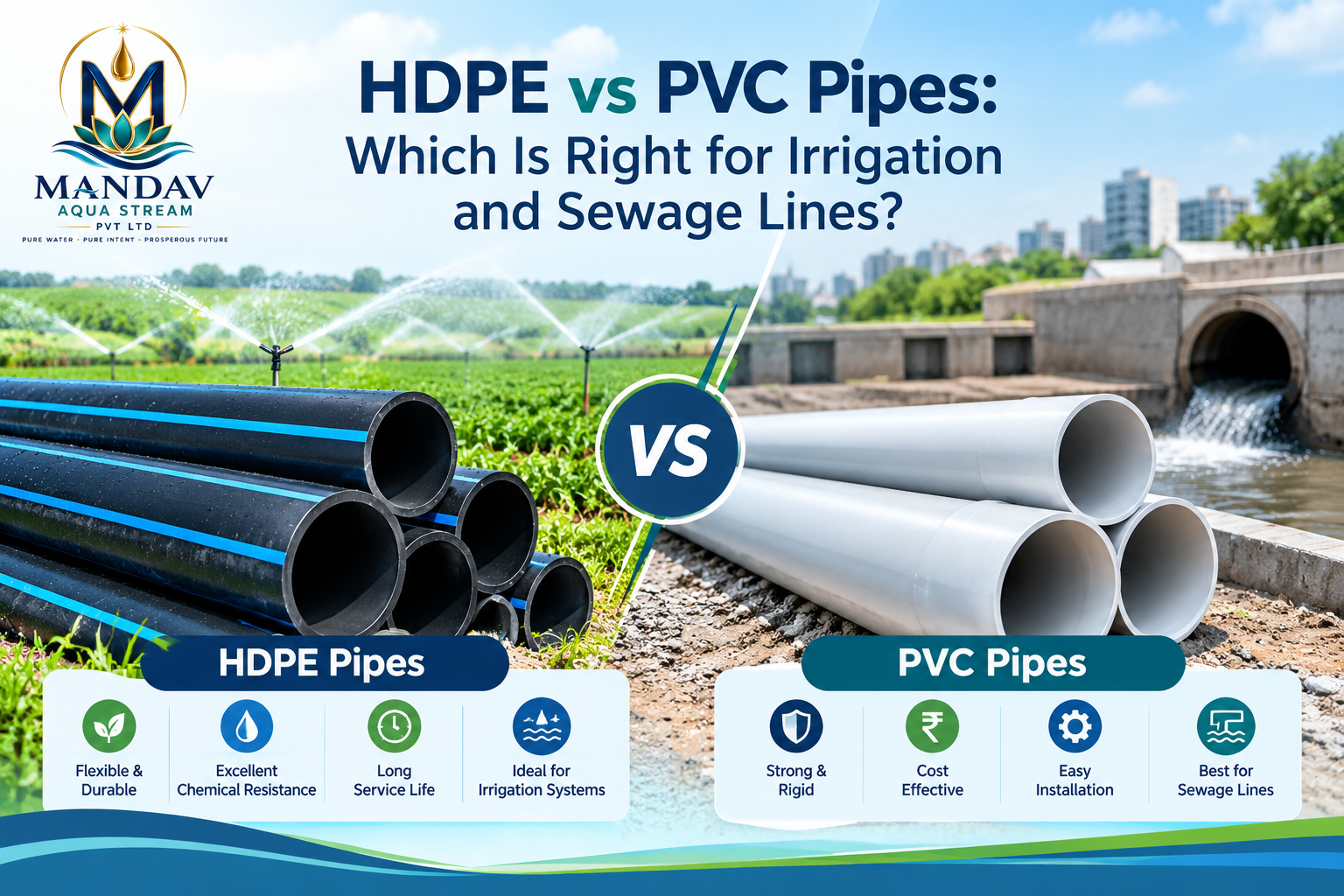
Choosing between DI, HDPE, and PVC pipes depends on the project’s technical requirements. Each material has different mechanical properties, installation considerations, and cost implications.
| Comparison Factor | DI Pipes | HDPE Pipes | PVC Pipes |
| Material | Ductile iron | High-density polyethylene | Polyvinyl chloride |
| Flexibility | Moderate | High | Relatively low |
| Mechanical strength | High | Good impact resistance | Good for specified applications |
| Connection method | Push-on or flanged | Fusion or mechanical joints | Solvent or mechanical joints |
| Common use | Water and infrastructure networks | Water, irrigation, industrial applications | Water distribution and drainage |
| Handling | Requires suitable lifting equipment | Relatively lightweight | Lightweight |
When should you choose DI pipes?
DI pipes may be suitable when a project requires substantial mechanical strength, pressure-handling capabilities, and robust pipeline connections.
When should you consider HDPE pipes?
HDPE may be appropriate where flexibility, fusion-welded joints, and resistance to certain forms of chemical exposure are important.
When are PVC pipes suitable?
PVC pipes are commonly considered for water distribution, drainage, and other applications where their pressure and dimensional specifications meet project requirements.
The final decision should be based on engineering calculations, installation conditions, operating requirements, and lifecycle costs rather than material preference alone.
How to Identify the Best DI Pipe Supplier in Chandigarh, Zirakpur?
Finding the Best DI Pipe Supplier in Chandigarh, Zirakpur requires evaluating the supplier’s technical understanding, product sourcing, quality assurance, and supply coordination.
Here are six important factors to consider before finalising your purchase.
1. Check Industry Experience
A supplier with relevant pipeline industry experience is more likely to understand the requirements of contractors, infrastructure developers, and industrial buyers.
Ask about the supplier’s experience with different project categories and its ability to coordinate product requirements.
2. Verify Product Quality and Documentation
Request technical specifications, inspection reports, test certificates, and applicable compliance documents.
For DI pressure pipes, IS 8329 is an important Indian Standard. For DI fittings used with pressure pipes, IS 9523 is relevant. Confirm the latest applicable revisions and project-specific requirements before procurement.
3. Evaluate Product Availability
Check whether the supplier can arrange the required pipe diameters, pressure classifications, fittings, and accessories.
For large infrastructure projects, coordinated availability is particularly important because incomplete material supply can affect installation schedules.
4. Understand Delivery and Transportation
DI pipes require appropriate handling during loading, unloading, and transportation.
Discuss delivery schedules, transportation arrangements, storage conditions, and material inspection procedures before confirming the order.
5. Compare Complete Project Costs
Do not compare quotations based only on the price per metre or per pipe.
Consider transportation, fittings, jointing accessories, protective specifications, handling expenses, and delivery conditions to understand the overall procurement cost.
6. Assess Communication and Support
A dependable supplier should communicate clearly about product specifications, availability, quotations, and delivery commitments.
This becomes particularly important when project requirements change during procurement.
Why Choose an Experienced Pipeline Supply Partner?
A successful infrastructure project depends on more than the quality of individual pipes. It requires proper material planning, product coordination, dependable sourcing, and timely communication.
Mandav Aqua Stream Pvt Ltd. provides pipeline solutions for water supply, sewage, irrigation, industrial, and infrastructure projects. With experience across different sectors, the company focuses on understanding project requirements and supporting customers with suitable pipeline product solutions.
Its business experience includes:
- 30+ years of industry experience in pipeline-related solutions.
- 4+ product categories serving different application requirements.
- 300+ projects or clients across various sectors.
- 28+ regions supplied, reflecting its wider supply reach.
For contractors, infrastructure developers, and industrial buyers, these capabilities provide a starting point for discussing project-specific material requirements and procurement needs.
What Should You Prepare Before Requesting a DI Pipe Quotation?
Providing accurate project information helps suppliers understand your requirements and prepare a more relevant quotation.
Before contacting a supplier, keep the following details ready:
| Information Required | Details to Provide |
| Project application | Water supply, sewage, industrial, or irrigation |
| Pipe diameter | Required nominal diameter (DN) |
| Pressure requirement | Operating and design pressure |
| Quantity | Total pipes or approximate pipeline length |
| Pipe specifications | Applicable standard, class, lining, and coating |
| Accessories | Required fittings, valves, and jointing components |
| Delivery details | Project location and expected delivery schedule |
If you have a BOQ or technical specification document, sharing it during the enquiry can make the quotation process more accurate.
Get Reliable DI Pipe Supply for Your Next Project
The performance of a pipeline network depends on selecting the right material, understanding technical requirements, and coordinating procurement through a dependable supply partner. From municipal water distribution and wastewater management to industrial and irrigation applications, DI pipes continue to serve important infrastructure requirements.
If you are searching for a Top DI Pipe Supplier Company in Chandigarh, Zirakpur, focus on technical understanding, quality documentation, product coordination, and supply experience rather than price alone.
Mandav Aqua Stream Pvt Ltd. brings more than three decades of industry experience and serves different pipeline-related project requirements across multiple regions.
Planning a water supply, sewage, irrigation, or industrial pipeline project? Contact Mandav Aqua Stream Pvt Ltd. to discuss your DI pipe requirements, share your project specifications, and request a suitable supply quotation.
Frequently Asked Questions
1. What is the difference between DI pipes and ordinary cast iron pipes?
DI pipes contain graphite in a spheroidal structure, which gives them better ductility and toughness than conventional grey cast iron pipes. This makes them more suitable for applications where mechanical stress and pressure-handling capabilities are important.
2. Which DI pipe specifications are important for water supply projects?
Important specifications include nominal diameter, pressure class, wall thickness, internal lining, external coating, joint type, and applicable manufacturing standards. The selection should match the hydraulic design and installation conditions.
3. Are DI pipes suitable for high-pressure water transmission?
Yes. DI pipes are available in different pressure classifications and can be used in high-pressure water transmission systems when correctly designed and specified. Engineers must consider operating pressure, surge pressure, pipe dimensions, and joint ratings.
4. What is the purpose of cement mortar lining in DI pipes?
Cement mortar lining provides an internal protective layer that helps reduce direct contact between the conveyed water and the iron surface. It also provides a suitable internal surface for water transportation when manufactured and applied according to the relevant specifications.
5. How can I select a reliable DI pipe supplier in Chandigarh, Zirakpur?
Compare suppliers based on relevant industry experience, product sourcing, technical documentation, quality requirements, fittings availability, transportation arrangements, and delivery commitments. Sharing your BOQ and project specifications can also help you evaluate quotations more accurately.
